Get Started Repaying Your Federal Student Loan: A Complete Guide to Repayment and Forgiveness Options
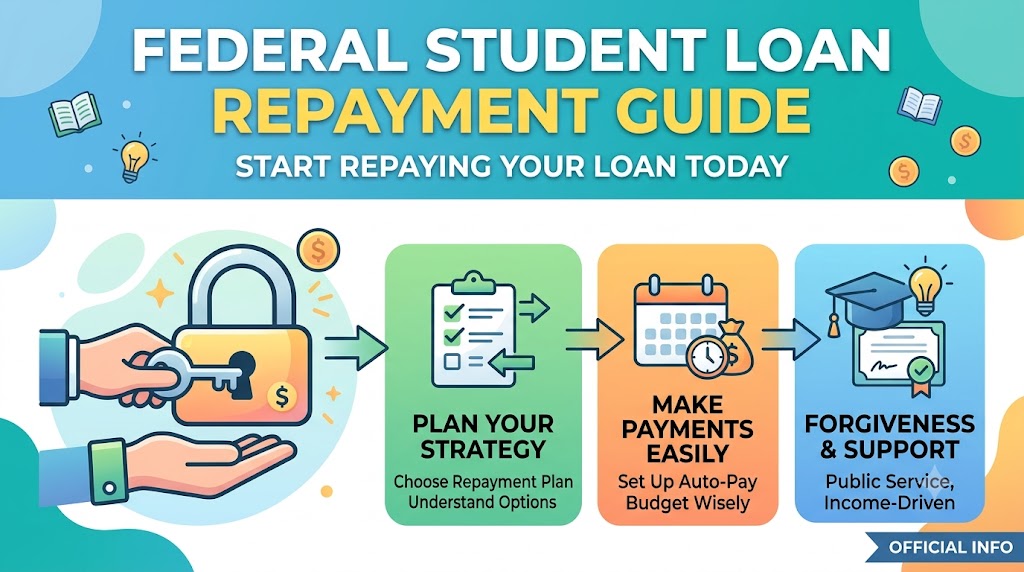
Your first student loan payment can feel like a big milestone — and a little intimidating if you're not sure where to start. The good news is that the federal loan system offers a range of repayment plans and forgiveness programs designed to make your debt manageable, no matter what stage of life or career you're in. Here's what you need to know before you make that first payment.
Step One: Make a Repayment Plan
Before your first payment is due, it's worth taking the time to understand your options rather than defaulting into whatever plan you're automatically assigned. The official hub for this information is StudentAid.gov, which walks borrowers through everything they need to build a solid repayment strategy, including:
- The different types of repayment plans available, from standard fixed payments to income-driven options
- When exactly your payments are required to begin
- The various ways you can make your payments each month
- What steps to take if you're struggling financially and can't keep up
- How to get in touch with your specific loan servicer
Since loan servicers and repayment terms can vary, it's worth reviewing your account directly rather than relying on general assumptions about how your loan works.
Could You Qualify for Student Loan Forgiveness?
Loan forgiveness isn't just for a lucky few — there are several established federal programs that forgive some or all of a borrower's remaining debt, depending on their career field or personal circumstances. Broadly speaking, eligibility usually falls into one of two categories: working in a qualifying profession, or facing a significant financial or health-related hardship.
Public Service Loan Forgiveness (PSLF)
If you've been making payments on a Direct Loan while working for a qualifying employer, you may be eligible for PSLF. Qualifying employers include:
- Federal, state, local, or tribal government agencies
- The U.S. military
- Not-for-profit organizations
PSLF is one of the most well-known forgiveness programs, but it also has strict documentation requirements, so it's worth confirming your employment and payment history qualify well before you expect forgiveness.
Teacher Loan Forgiveness
Educators have their own dedicated forgiveness path. You may qualify if you've taught full-time for five consecutive years at a low-income school or educational service agency. This program is specifically designed to support teachers working in under-resourced communities.
Health Care Provider Loan Forgiveness
If you work in healthcare, three separate federal agencies sponsor their own loan repayment programs:
- National Health Service Corps — for professionals across primary care, dentistry, mental health, and related fields
- National Institutes of Health — for current and aspiring medical researchers
- Indian Health Service — for clinicians working at IHS facilities
Each program has its own eligibility rules and service commitments, so it's worth comparing them if you work in a qualifying field.
Other Forgiveness, Discharge, and Cancellation Situations
Beyond career-based programs, your loans may also be forgiven, discharged, or canceled under certain personal circumstances, including:
- Filing for bankruptcy
- Living with a qualifying disability
- Being enrolled at a school that closes while you're a student
Each of these situations comes with its own specific eligibility criteria, so it's worth researching your exact circumstances before assuming you don't qualify.
Simplify Things With Loan Consolidation
If you're juggling multiple federal student loans and finding it hard to keep track of payments and due dates, a Direct Consolidation Loan lets you combine them into a single loan with one monthly payment. Before consolidating, it's worth understanding:
- The trade-offs involved, since consolidation can simplify payments but may also extend your repayment timeline
- Which types of federal loans are eligible to be consolidated
- The specific eligibility requirements you'll need to meet
- How the application process actually works
Consolidation isn't the right move for everyone, but for borrowers overwhelmed by multiple servicers and payment dates, it can make repayment far more manageable.
Final Thoughts
Repaying federal student loans doesn't have to be confusing if you take the time upfront to understand your options. Whether you're exploring an income-driven repayment plan, checking your eligibility for forgiveness, or considering consolidation, a little research now can save you a lot of stress later.
Have you gone through the loan forgiveness or consolidation process? Share your experience in the comments to help other borrowers figure out their next step.
#StudentLoanRepayment #StudentLoanForgiveness #PublicServiceLoanForgiveness #TeacherLoanForgiveness #FederalStudentAid #LoanConsolidation #StudentDebt #IncomeDrivenRepayment #StudentAidGov #DirectLoans