Child Tax Credit and Credit for Other Dependents: What You Need to Know
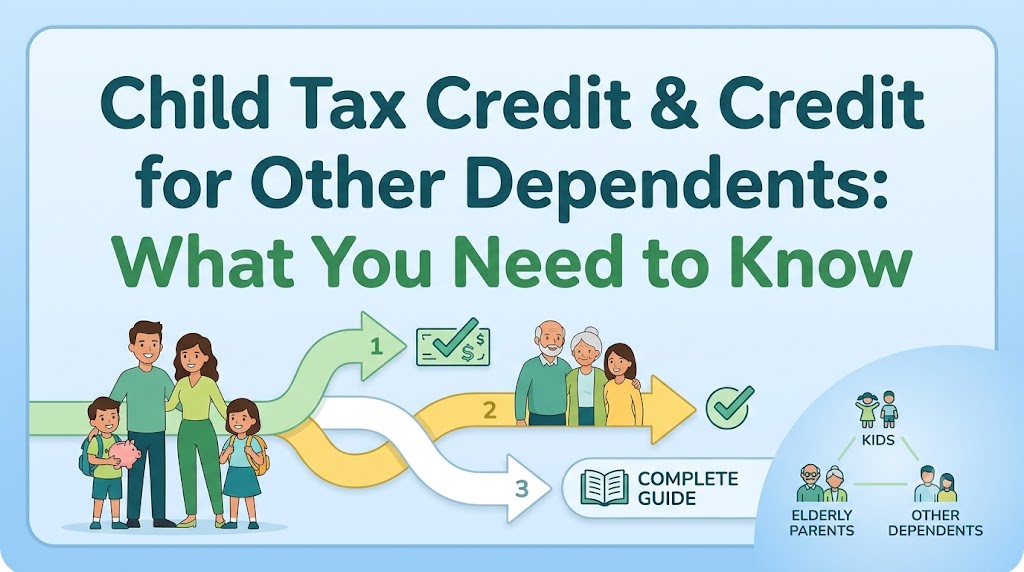
If you have a child or another dependent relying on you financially, there's a good chance you're leaving money on the table if you're not claiming the right tax credit. Two of the most valuable — and most commonly misunderstood — credits available are the Child Tax Credit (CTC) and the Credit for Other Dependents (ODC). Both can meaningfully lower your tax bill, but they work a little differently, and knowing which one applies to your situation can make a real difference at filing time.
Here's a breakdown of how each credit works, who qualifies, and how to figure out which one you're eligible for.
Understanding the Child Tax Credit
A common misconception is that you need to owe taxes or even file a full return to benefit from this credit — that's not always true. Even people who don't normally file a tax return may still qualify for a tax break through the Child Tax Credit.
Eligibility isn't based on just one factor. The IRS looks at several things together, including:
Your income — the credit phases out above certain thresholds
The child's age — there are specific age cutoffs that determine eligibility
Your relationship to the child — biological, adopted, step, or foster relationships may all qualify, along with certain other family relationships
Residency and support requirements — the child generally needs to have lived with you for more than half the year and not have provided more than half of their own financial support
Because these rules interact with each other, it's worth reviewing the IRS's official guidance on how the Child Tax Credit works before assuming you do or don't qualify. That page walks through eligibility requirements, how to actually claim the credit on your return, and whether you might also be eligible for additional related credits.
Learn how the Child Tax Credit worksWhat If You Don't Qualify for the Child Tax Credit?
Not every dependent meets the criteria for the Child Tax Credit — but that doesn't necessarily mean you're out of options. If your dependent doesn't qualify under the CTC rules (for example, if they're older than the CTC age limit, or they're a dependent relative rather than your child), you may still be able to claim the Credit for Other Dependents.
This credit is smaller — up to $500 per qualifying dependent — but it's still a meaningful reduction in your tax liability, and it covers a broader range of dependents than the Child Tax Credit does. That can include:
Dependent children who no longer meet the CTC age requirement
Dependent parents or other relatives you support
Other qualifying individuals who live with you and rely on you financially
As with the Child Tax Credit, eligibility comes down to your income level and whether the specific dependent meets the IRS's qualifying criteria. The IRS's guide to understanding the Credit for Other Dependents breaks down exactly who counts, what the income limits look like, and the steps for claiming it on your return.
Not Sure Which Credit Applies to You?
Given how similar these two credits sound, it's easy to get confused about which one — if either — applies to your specific situation. Rather than guessing, the IRS offers a free online tool that walks you through a short series of questions about your dependent and your household to determine whether you qualify for the Child Tax Credit, the Credit for Other Dependents, or neither.
Using this tool before you file can save you from either missing out on a credit you're entitled to, or claiming one you don't actually qualify for — which can slow down your refund or trigger a correction notice later.
Why It's Worth Double-Checking
Tax credits like these exist specifically to offset the cost of raising children and supporting dependents, but they're only helpful if you actually claim them correctly. Every year, eligible taxpayers miss out simply because they assume they don't qualify, or because they're unaware a credit exists for dependents outside the traditional "child under 17" category.
Before you file this year, take a few minutes to review your dependents against the criteria above. If your household situation changed at all — a new child, an aging parent who moved in, or a dependent who aged out of the CTC — it's worth running through the IRS eligibility tool to make sure you're claiming everything you're entitled to.
#childtaxcredit #creditforotherdependents #taxcredits #IRS #taxseason #familytaxbenefits #dependentcredit #taxfiling #taxdeductions #personalfinance