Travel Advisories and STEP: How to Stay Safe and Informed on Your Next Trip Abroad
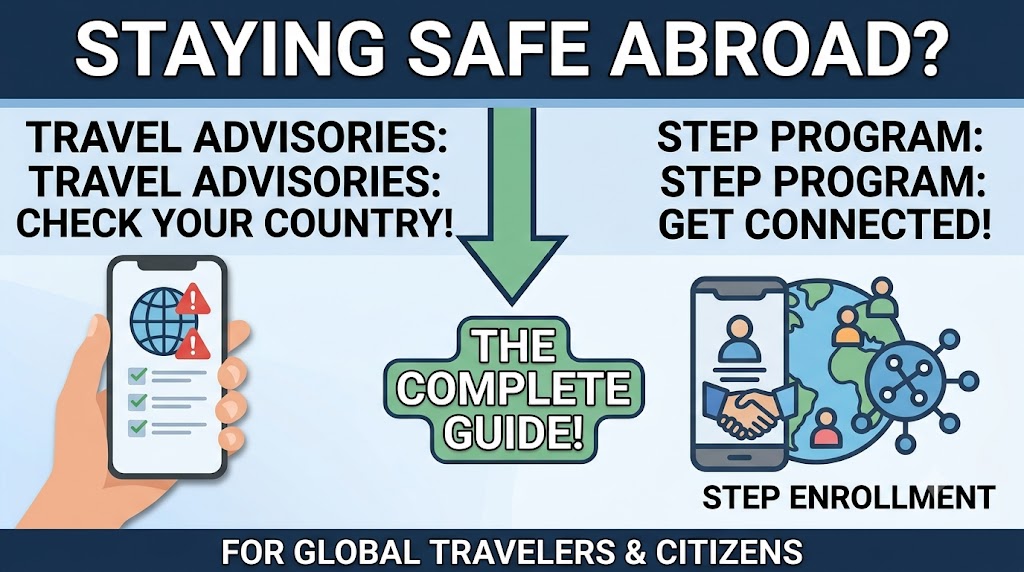
Before you get swept up in booking flights and picking out hotels, there's a step in trip planning that's easy to overlook but genuinely important: checking travel advisories for your destination and registering with STEP.
These two resources — both provided free by the U.S. government — exist to keep American travelers informed and supported while they're abroad. Whether you're heading somewhere completely safe or a destination with some added risk, knowing how these systems work can make a real difference if something unexpected happens during your trip.
What Are Travel Advisories, and Why Should You Check Them?
Before planning any international trip, it's worth taking a few minutes to check whether your destination country has an active travel advisory. These advisories are issued by the U.S. Department of State and are designed to give American travelers a clear, standardized sense of the risk level in a given country.
Travel advisories are broken into four levels, ranging from routine caution to a strong warning against travel altogether:
Level 1 – Exercise Normal Caution. This is the lowest risk category. That said, don't take it as a green light to let your guard down completely — international travel always carries some inherent risk, and safety conditions abroad can differ from what you're used to in the U.S.
Level 2 – Exercise Increased Caution. At this level, travelers should be aware of heightened risk in the destination country.
Level 3 – Reconsider Travel. Countries at this level may carry serious risks, and it's worth thinking carefully about whether the trip is necessary.
Level 4 – Do Not Travel. This is the highest risk category. Countries under a Level 4 advisory may present a real chance of life-threatening danger, and importantly, the U.S. government's ability to assist you in an emergency may be limited or nonexistent.
These advisory levels aren't arbitrary — they're shaped by a range of real-world factors, including:Crime
Terrorism
Civil unrest
Disease outbreaks
Natural disasters
Since conditions can shift, it's smart to check advisories close to your travel dates rather than months in advance. You can find out what travel advisories may affect your trip using the State Department's interactive tool, where you can explore the map or filter results by destination country.
What Is STEP, and Why Should You Register?
Once you've checked the advisory level for your destination, the next smart move is enrolling in the Smart Traveler Enrollment Program (STEP) — a free service offered by the U.S. Department of State.
STEP essentially puts you on the radar of the nearest U.S. embassy while you're traveling. When you register for a specific trip, you'll start receiving emails with relevant news, safety alerts, and updated travel advisories for that location, so you're not caught off guard by developments after you've already left home.
Beyond just keeping you informed, STEP also allows the local embassy to:
Provide instructions during an emergency, whether that's a natural disaster, civil unrest, or another crisis unfolding in real time
Help family and friends reach you if there's an emergency back home or if they're trying to confirm your safety
Speed up the process of replacing a lost or stolen passport, helping you get a temporary one faster than you might otherwise
For something that costs nothing and takes just a few minutes, the potential benefits during an actual emergency are significant.
How to Register for STEP
Signing up is simple. To register, select "Create account" and enter some basic personal information, including:
Your name
Date of birth
Passport number
Emergency contact information
You'll also be able to select — or update — your destination country, which customizes the specific news and alerts you receive for that trip. If your plans change or you're traveling to multiple countries, you can adjust this information accordingly.
Final Thoughts
Travel advisories and STEP registration aren't the most glamorous parts of trip planning, but they're two of the most practical tools available to American travelers. Checking the advisory level for your destination gives you a clear picture of what to expect, while STEP ensures that if something does go wrong, help is easier to reach — and you're easier to find.
Before your next international trip, take ten minutes to check the current advisory for your destination and register your travel dates in STEP. It's a small step now that could make a real difference later.
Disclaimer: This article is for general informational purposes only and does not constitute legal or travel advice. Always verify current advisories and requirements with official U.S. government sources before traveling.
#TravelAdvisory #STEP #SmartTravelerEnrollmentProgram #TravelSafety #USCitizenTravel #StateDepartment #TravelTips #InternationalTravel #TravelPlanning #EmbassySupport