Early Intervention and Special Education Services: A Parent's Guide to Getting Your Child the Support They Need
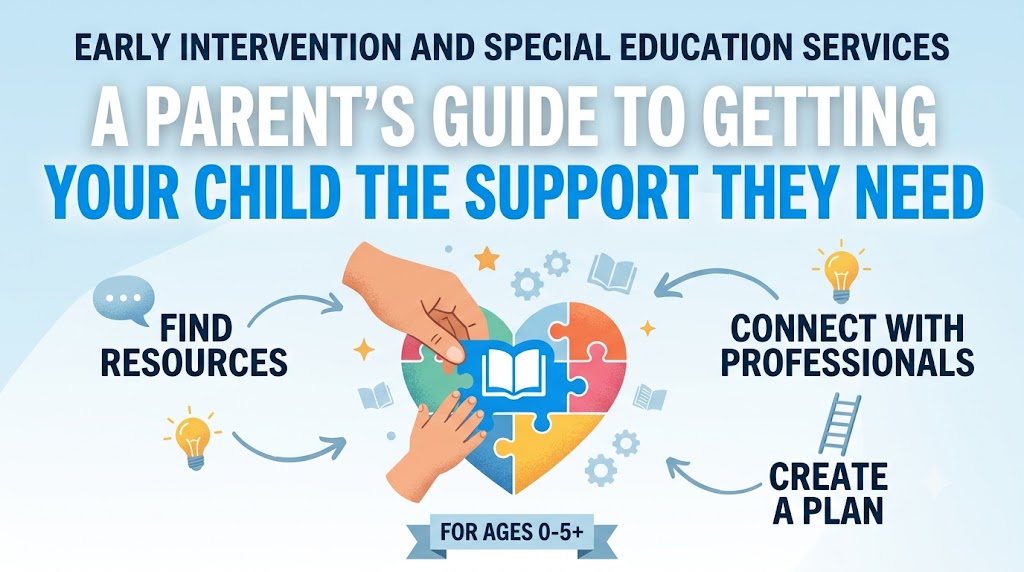
Finding out your child might have a developmental delay or disability can feel overwhelming. The good news? You don't have to figure it out alone. Every state in the U.S. offers free or low-cost programs designed to help kids catch up, thrive, and reach their full potential. Here's what you need to know about early intervention and special education services, and exactly how to get started.
What Is Early Intervention?
Early intervention programs support infants and toddlers who show signs of developmental delays or disabilities. These services aren't one-size-fits-all — they're tailored to your child's specific needs and can include things like speech therapy, physical therapy, occupational therapy, and family training.
The earlier a child receives support, the better the long-term outcomes tend to be. That's why pediatricians and educators consistently encourage parents not to take a "wait and see" approach if they notice something might be off.
How to Access Early Intervention Services
- Birth to age 3: Reach out to your state's early intervention program to start the evaluation process. Every state has a dedicated system for this, and services are typically provided at no cost or on a sliding scale.
- Age 3 and older: Contact your local elementary school or school district directly to request an evaluation. This applies even if your child isn't currently enrolled in public school — homeschooled and private school families are still entitled to a public evaluation.
Understanding Special Education Services
Once a child turns 3, the responsibility for support often shifts from early intervention programs to the local school system through special education services. If your child qualifies, they'll receive an Individualized Education Program (IEP) — a formal, legally binding plan that outlines specific goals, accommodations, and services tailored to your child's learning needs.
An IEP might include things like extra time on tests, one-on-one aide support, modified assignments, or specialized instruction in reading or math. These services are provided at no cost to families, funded through public education systems.
If you're concerned about your child's development or learning progress, you have the right to formally request an evaluation through your school district at any time — you don't need a teacher or doctor to initiate it on your behalf.
Where to Turn for Additional Support
Navigating this system can be confusing, especially the first time around. Fortunately, there are resources built specifically to help parents through it:
- Parent Training and Information Centers (PTIs) exist in every state and offer free guidance, workshops, and one-on-one support for families of children and young adults (birth through age 26) with disabilities. These centers can help you understand your rights, prepare for meetings with the school, and advocate effectively for your child.
- State complaint procedures are available if you believe your child isn't receiving the services outlined in their IEP or isn't being properly evaluated. You have the right to formally raise concerns with your state's department of education, and there's a structured process for doing so.
Final Thoughts
Whether your child is an infant just starting to show signs of delay or a school-age student who needs more structured support, help is available — and it's your right as a parent to seek it out. Don't hesitate to reach out to your state's early intervention office or your local school district today. The sooner you start the conversation, the sooner your child can get the support they deserve.
If you've been through this process yourself, share your experience in the comments below — your story might be exactly what another parent needs to hear right now.
#EarlyIntervention #SpecialEducation #IEP #DevelopmentalDelay #ChildDevelopment #ParentResources #SpeechTherapy #OccupationalTherapy #SchoolDistrict #ParentTrainingCenters