Military Tuition Assistance: How Service Members, Veterans, and Families Can Pay for College
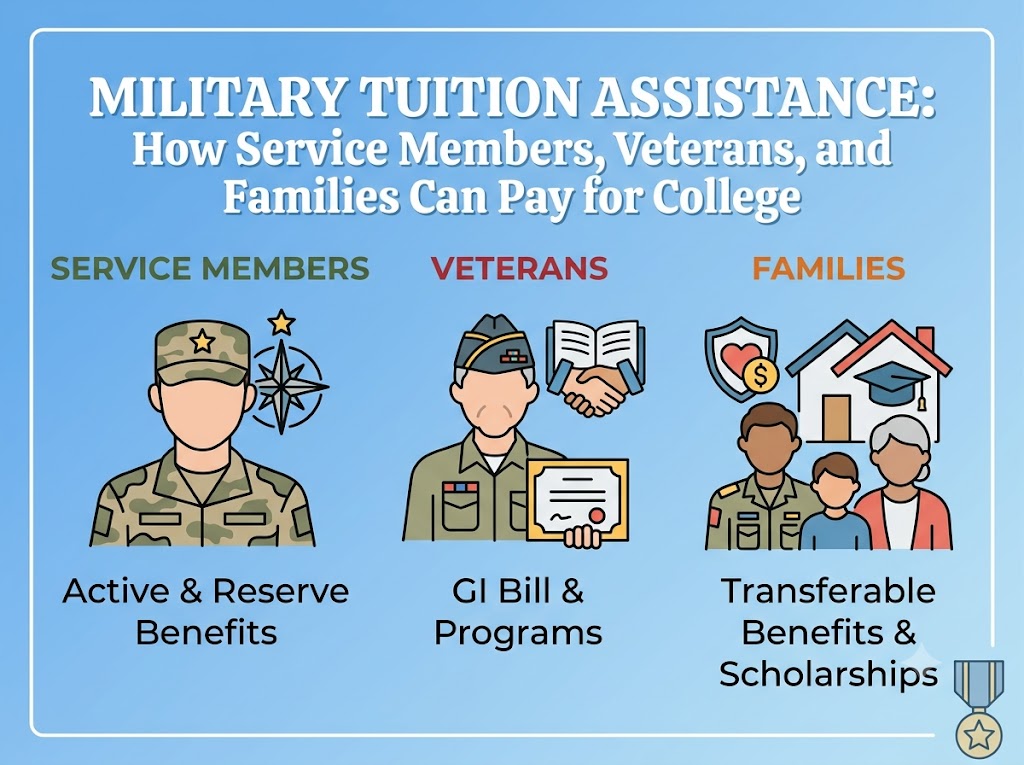
Serving in the military comes with one of the most valuable education benefits available in the United States — the opportunity to attend college or trade school at little to no cost. Whether you're a high school senior considering ROTC, an active duty service member, a veteran, or a military spouse or child, there's likely a program designed to help cover your tuition, fees, housing, and books.
Here's a breakdown of the major military and veteran education benefit programs, who qualifies, and how to apply.
Military Branch Scholarship Programs
Each branch of the U.S. military — Army, Navy, Air Force, Marine Corps, and Coast Guard — offers its own college scholarship programs for eligible students. In addition to covering tuition, these scholarships typically pay for books, fees, and provide a monthly living stipend. In exchange for the scholarship, recipients commit to serving in the military after graduation, usually beginning their career as a commissioned officer.
ROTC Scholarships
The Reserve Officer Training Corps (ROTC) is one of the most well-known military scholarship pathways. It's open to high school seniors, current college students, and enlisted service members who meet academic and physical fitness requirements. Each branch runs its own ROTC program with different participating campuses, eligibility rules, and application timelines, so it's worth researching the specific branch that fits your goals:
Coast Guard College Student Pre-Commissioning Initiative (CSPI)
The Coast Guard offers a similar path through its College Student Pre-Commissioning Initiative. CSPI covers school fees, provides a housing allowance, and pays a salary while you complete your degree. You can learn how CSPI works and find a recruiter to start the application process.
Education Benefits for Veterans
The GI Bill
For veterans who have already completed their service, the Department of Veterans Affairs (VA) offers the GI Bill — one of the most generous education benefits in the country. Depending on your eligibility, the GI Bill can cover tuition, a monthly housing allowance, and money for books and supplies. Coverage amounts vary based on how long you served and which GI Bill program you qualify for, so it's worth reviewing your specific GI Bill eligibility before enrolling in school.
If you don't qualify for the GI Bill, don't assume you're out of options. The VA offers several other veteran education benefits that may apply to your situation, including vocational rehabilitation and state-specific veteran tuition waivers.
Education Benefits for Military Family Members
Military benefits don't stop with the service member — spouses and children can often access education funding too.
Transferring GI Bill Benefits
Active duty service members who qualify may be able to transfer their unused GI Bill benefits to a spouse or child. This can be a significant way to fund a family member's college education without them taking out loans. Review the rules for transferring GI Bill benefits to understand the service commitment and timing requirements involved.
Survivors' and Dependents' Educational Assistance (DEA)
If a veteran has died or become permanently disabled as a result of their military service, their spouse and children may be eligible for survivor education benefits through the DEA program. This program covers eligibility requirements, benefit amounts, and the application process for qualifying family members.
Iraq and Afghanistan Service Grant
Students whose parent died as a result of military service in Iraq or Afghanistan after September 11, 2001, may qualify for the Iraq and Afghanistan Service Grant. This federal grant helps cover tuition costs for eligible students who don't otherwise qualify for a Pell Grant.
Final Thoughts
Military tuition assistance programs exist to reward service and reduce the financial burden of higher education for those who've earned it — whether through active duty, veteran status, or family connection. Because eligibility rules and benefit amounts vary widely between programs, it's worth speaking directly with a base education officer, VA representative, or school's veteran services office before making a decision. Taking the time to compare your options could mean the difference between graduating debt-free and taking on loans you didn't need.
#MilitaryTuitionAssistance #GIBill #ROTCScholarships #VeteranEducationBenefits #MilitaryScholarships #CoastGuardCSPI #DEAProgram #MilitaryFamilyBenefits #CollegeFundingForVeterans #IraqAfghanistanServiceGrant