Workers' Compensation Explained: How to File a Claim and Get the Benefits You Deserve
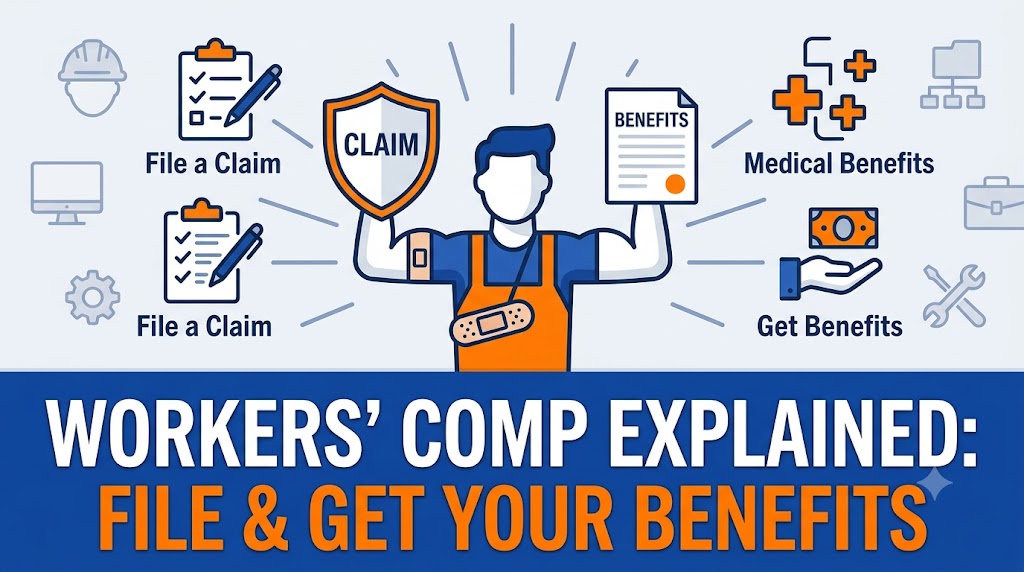
Getting hurt on the job is stressful enough without having to navigate a maze of paperwork and legal jargon. If you've suffered a work-related injury or illness, workers' compensation (often just called "workers' comp") exists to protect you financially while you recover. This guide breaks down exactly what workers' comp covers, who's eligible, and where you need to go to file a claim — whether you work for a private company, a state agency, or the federal government.
What Is Workers' Compensation?
Workers' compensation is a form of insurance that employers are required to carry in nearly every state. It provides financial protection to employees who are injured or become ill because of their job. In exchange for these guaranteed benefits, employees generally give up the right to sue their employer for negligence, which is why workers' comp is often described as a "no-fault" system — you don't need to prove your employer did something wrong to receive benefits.
What Benefits Does Workers' Compensation Provide?
While the specifics vary from state to state, most workers' compensation programs are built around three core benefits:
Lost wage replacement – If your injury or illness keeps you out of work, workers' comp typically pays a portion of your regular wages while you recover. This isn't usually 100% of your salary, but it's designed to help cover essential expenses during your recovery period.
Medical expense coverage – Workers' comp pays for medical treatment related to your work injury or illness, including doctor visits, hospital stays, physical therapy, prescriptions, and in some cases, long-term rehabilitation.
Dependent benefits – In the tragic event that a worker dies as a result of a job-related injury or illness, workers' compensation provides benefits to surviving dependents, such as a spouse or children, to help offset the financial loss.
These benefits are meant to ease the burden of medical bills and lost income so injured workers can focus on healing rather than worrying about how to pay rent or put food on the table.
Where Do You File a Workers' Compensation Claim?
This is where things can get a little confusing, because workers' compensation isn't run by a single federal agency. Instead, there are two main paths depending on who you work for.
State Workers' Compensation Programs
If you work for a private company or a state/local government agency, your claim will almost always go through your state's workers' compensation office. Each state administers its own program with its own rules, benefit amounts, and filing deadlines, so it's important to contact your specific state office as soon as possible after an injury occurs. You can find your state's contact information and program details through the U.S. Department of Labor's directory of state workers' compensation offices.
👉 Contact your state workers' compensation office
Federal Workers' Compensation Programs
If you're a federal employee, or you belong to one of a handful of other specific worker categories, your claim is handled differently. These claims go through the U.S. Department of Labor's Office of Workers' Compensation Programs (OWCP), which manages several distinct programs covering federal civilian employees, longshore and harbor workers, energy employees exposed to radiation, and coal miners affected by black lung disease.
👉 U.S. Department of Labor's Office of Workers' Compensation Programs (OWCP)
What If Your Claim Is Denied?
A denial isn't the end of the road. Every workers' compensation program — whether state or federal — has an appeals process. If your claim is denied, you typically have a specific window of time to file an appeal, so it's worth reviewing the denial notice carefully and reaching out to your state office or the OWCP promptly. In many cases, working with a workers' compensation attorney can significantly improve your chances of a successful appeal, especially if your case involves a disputed diagnosis or a disagreement about whether your injury is truly work-related.
Final Thoughts
Workers' compensation exists for one reason: to protect employees when the unexpected happens on the job. Knowing which program applies to your situation — state or federal — and understanding what benefits you're entitled to can make a huge difference in how smoothly your recovery goes. If you've been injured at work, don't wait to file. Contact the appropriate office right away, keep detailed records of your injury and treatment, and don't hesitate to appeal if your claim is initially denied.
#WorkersCompensation #WorkInjuryClaim #WorkersCompBenefits #JobInjuryLaw #WorkplaceSafety #OWCP #StateWorkersComp #DisabilityBenefits #EmployeeRights #WorkersCompAppeal