Mortgage Help and Home Repair Loans After a Disaster: What Homeowners Need to Know
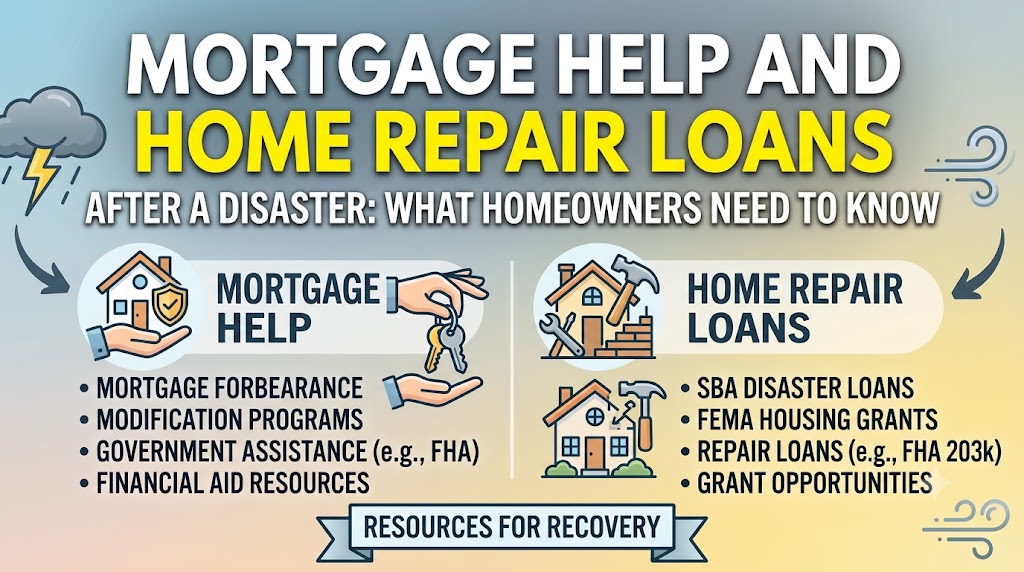
Watching a disaster damage or destroy your home is devastating enough — the last thing you want to worry about next is how you're going to keep up with your mortgage or pay to rebuild. The good news is that if you live in a presidentially declared disaster area, there are real options available to help you stay afloat and get your home back. Here's a breakdown of what's out there and how to access it.
You Still Have to Pay Your Mortgage — But You Have Options
It might feel counterintuitive, but your mortgage obligation doesn't pause automatically just because your home was damaged in a disaster. You're still required to make payments unless you take action. If you're struggling to pay, the most important first step is to contact your mortgage servicer directly and explain your situation.
Many servicers offer mortgage forbearance for homeowners affected by disasters, which temporarily reduces or pauses your monthly payments while you get back on your feet. It's not automatic, though — you have to ask. Reach out to your servicer as soon as possible and specifically ask whether you qualify for forbearance.
Extra Help for FHA Loan Borrowers
If your mortgage is backed by the Federal Housing Administration (FHA), you may have access to additional relief options beyond standard forbearance. The FHA offers specific disaster relief provisions for borrowers, including options that can help you avoid foreclosure while you recover. The best way to find out what applies to your situation is to check your eligibility directly through HUD, then follow up with your mortgage servicer once you know where you stand.
Getting Money to Repair or Replace Your Home
Beyond managing your existing mortgage, you may also need funding to actually fix or rebuild your home. There are two major paths worth exploring:
SBA Home Disaster Loans
Many people don't realize the Small Business Administration doesn't just lend to businesses — it also offers disaster loans directly to homeowners and renters, regardless of whether they own a business. To qualify:
- Your home must be located in a presidentially declared disaster area
- The loan must be used for your primary residence
- The funds can't duplicate money you've already received from insurance or other benefit programs
Before you can apply for an SBA disaster loan, you'll first need to register with FEMA. This step is required and typically the very first thing you should do after a disaster, even before you start gathering paperwork for other assistance programs.
FHA Mortgages to Rebuild or Replace Your Home
If your home was completely destroyed, the FHA has a specific mortgage insurance program designed to make it easier to finance a rebuild or a new home purchase. One of the biggest advantages of this program is that it doesn't require a down payment, which can make a huge difference when you're already dealing with disaster-related expenses. Instead, the mortgage insurance cost is simply folded into your regular monthly mortgage payment.
To take advantage of this option, you'll need to work with an FHA-approved lender who can walk you through the specific application requirements.
Where to Start
If your home was affected by a disaster, don't wait to reach out for help. Start by registering with FEMA, then contact your mortgage servicer to discuss forbearance options, and look into whether an SBA or FHA loan makes sense for your rebuilding costs. Acting early can make a real difference in how quickly — and how smoothly — you're able to recover.
Have questions about a specific step in this process? Drop them in the comments, and let's help each other navigate disaster recovery together.
#DisasterRecovery #MortgageForbearance #FHALoan #SBADisasterLoan #HomeRepairLoan #MortgageAssistance #FEMA #DisasterAssistance #HomeownerHelp #NaturalDisasterRecovery